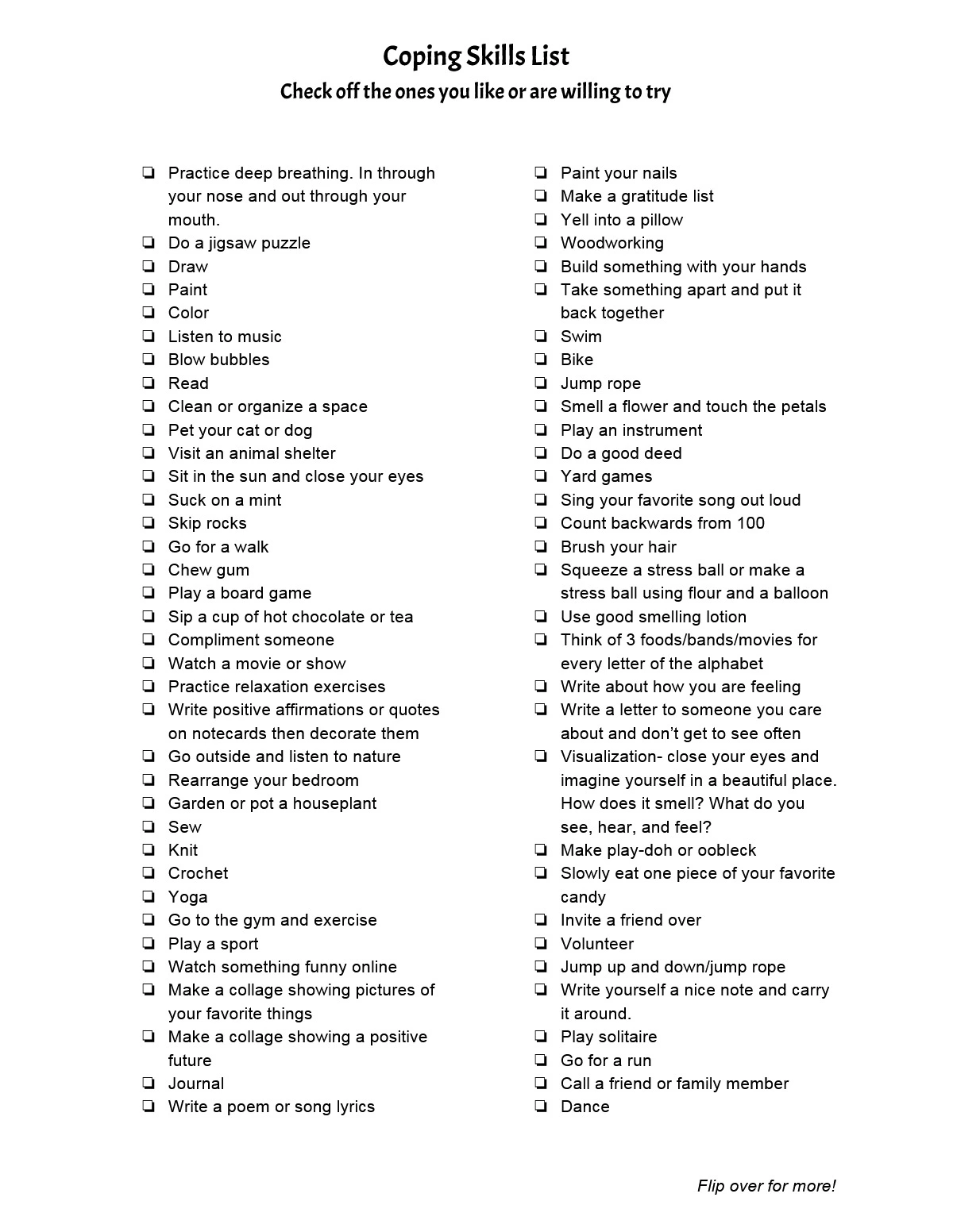
| Coping Skill | Description |
|---|
| Deep Breathing | Practice slow, deep breaths to calm the nervous system. |
| Mindfulness Meditation | Focus on the present moment to reduce stress and increase awareness. |
| Physical Exercise | Engage in walking, running, yoga, or any physical activity to release tension. |
| Progressive Muscle Relaxation | Tense and release muscle groups to reduce physical stress. |
| Journaling | Write about your thoughts and feelings to process emotions. |
| Listening to Music | Play calming or uplifting music to change your mood. |
| Visualization | Imagine a peaceful or relaxing place to mentally escape stress. |
| Talk to Someone | Share your feelings with a friend, family member, or therapist. |
| Hobbies/Creative Activities | Engage in painting, knitting, gardening, or other creative outlets. |
| Spend Time Outdoors | Take a walk, hike, or sit outside to get fresh air and reset. |
| Aromatherapy | Use essential oils (lavender, peppermint, etc.) to help soothe your mind. |
| Grounding Techniques | Focus on your senses (5 things you see, 4 things you can touch, etc.) |
| Self-Compassion | Treat yourself with kindness and understanding, especially during tough times. |
| Setting Boundaries | Learn to say “no” and avoid overloading yourself to reduce stress. |
| Laughing | Watch a funny movie or listen to a comedy podcast to release tension. |
| Progressive Exposure | Gradually face your fears or stressors in small, manageable steps. |
| Sleep | Prioritize rest to recharge and restore energy. |
| Cognitive Behavioral Techniques | Challenge negative thoughts and replace them with positive, realistic ones. |
| Mindful Walking | Practice walking with awareness, focusing on each step and your breath. |